
Shopping Cart
Fire reaction and fire resistance in soundproofing walls: what acoustic insulation designers need to know
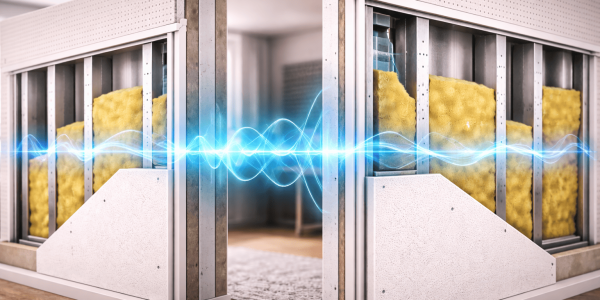
Acoustic insulation and fire safety: two different performances that must coexist In the professional acoustic insulation sector, the choice of materials cannot be limited to noise reduction; every soundproofing system must properly comply with current fire safety regulations. More and more often, designers of high-performance acoustic partition walls face generic requests such as “materials in class A1 or A2”, but in the context of dry acoustic insulation systems, it is essential to distinguish between the reaction to fire of the sound-insulating material and the fire resistance of the wall as a whole. Confusing these two aspects means not understanding how a certified soundproofing stratigraphy actually works.
Read more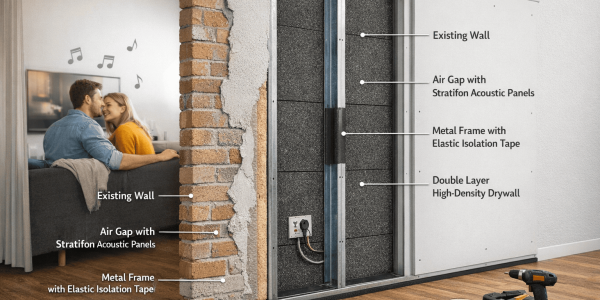
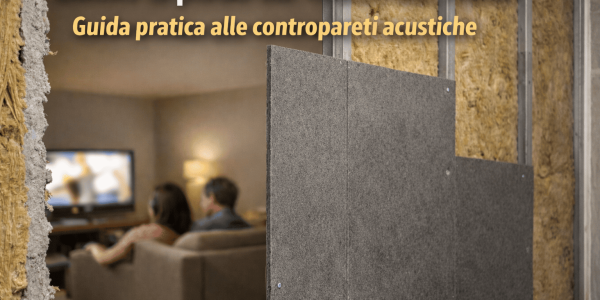
Insulating Walls from Neighbors' Noise: A Practical Guide to Acoustic Counterwalls
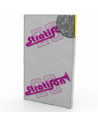
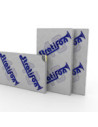
Noises coming from the adjacent apartment – voices, television, music, impulsive sounds – are among the most common causes of discomfort in apartment buildings. Even when the masonry seems “massive”, vibrations and sound waves find alternative paths through lightweight walls, service chases, and structural joints. In many cases, the most effective solution is not to intervene on the existing wall, but to create an independent soundproof partition wall, based on the mass–spring–mass principle and on high-performance panels such as the Stratifon systems.
Read more
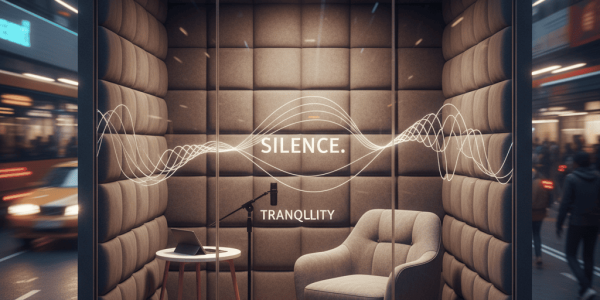

Advanced applications of Stratifon acoustic insulation: beyond plasterboard
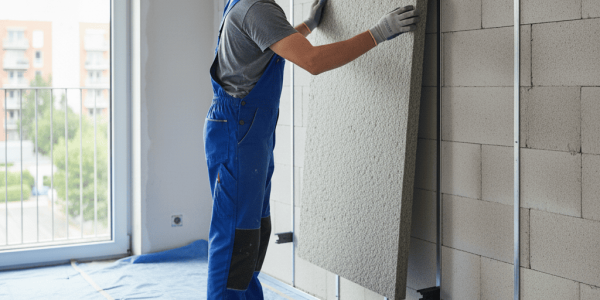
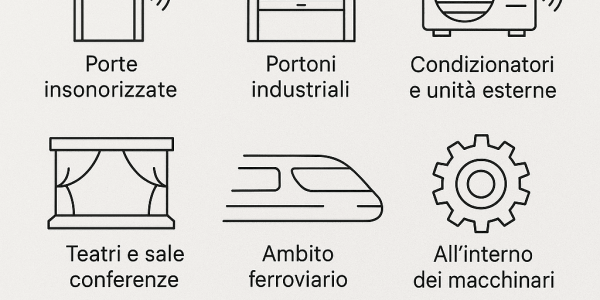
Sound insulation is a cross-sector requirement that affects numerous sectors, well beyond lightweight construction. Stratifon, initially designed for plasterboard, has established itself over time as a versatile, efficient, and lightweight solution for noise control in a variety of contexts. In this article, we explore all the alternative areas in which it can be used, based on real-world cases and market needs.
Read more
How to choose the right sound-absorbing panel for you
The effectiveness of the panel varies according to the sound frequency to be absorbed. Low frequencies (50–250 Hz), such as those generated by machinery or traffic, require thick materials or the use of specific elements such as bass traps, to be placed in the corners of the room. Mid-high frequencies (500–4000 Hz), such as the human voice, can be effectively managed even with thinner panels.
Read more