
Shopping Cart
- Simone
- News
- 0 likes
- 2353 views
- 0 comments

1. External noise: a problem for development and well-being
Children are particularly vulnerable to environmental noise pollution. Unlike adults, they struggle to filter sounds and concentrate in the presence of disturbing noises, which can affect learning, language development, and sleep. Studies in educational settings show that noise levels above 60–65 dB can impair concentration and increase stress in both children and teachers.
External noises such as traffic, construction sites, or neighborhood sounds can easily penetrate bedrooms or study areas. The goal is to isolate or reduce these sounds to create a protected environment for development and rest.
2. Difference between insulation and sound absorption
-
Acoustic insulation: blocks or attenuates the transmission of sound from outside to inside.
-
Sound absorption: acts within the room, reducing reverberation.
To protect children from external noise, the best approach is to combine both solutions: insulation to block unwanted sounds and absorption to ensure a comfortable indoor acoustic environment.
3. Materials and strategies to contain external noise
3.1 Soundproof panels for windows and walls
To effectively reduce external noise, it is recommended to install materials with high specific mass, such as:
- Additional layers of plasterboard with cavity and mineral wool.
- Panels made of dense materials like rock wool or fiberglass.
- Multilayer panels with different densities that achieve excellent performance in just a few centimeters of thickness.
3.2 Specific solutions for doors and windows
Interior doors and windows are often weak points. Applying self-adhesive panels or installing seals and double glazing significantly reduces sound transmission.
3.3 External barriers
When noise comes from external sources (streets, construction), weather- and UV-resistant noise barriers—like RESIST UV panels—can be installed in gardens or terraces adjacent to the house.
3.4 Supplementary solution: Stratifon panels
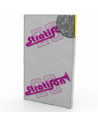
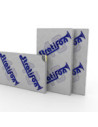
- Stratifon 29: a 3.5 cm thick sound-insulating and sound-absorbing panel that achieves up to 59 dB insulation in partition walls thanks to elastic material, 5 kg/m² heavy membrane, and high-density glass wool. Self-supporting up to 5 m² and ideal for rooms with limited space.
- Stratifon 40: a 7 cm thick panel composed of six multilayer elements based on the "spring–mass–spring" principle, with up to 40 dB soundproofing (61 dB in partitions) and a moderate weight (~17 kg/m²). Moisture-resistant, stable, and certified by CSI and Istituto Giordano.
When to use them:
- Ideal for drywall wall or ceiling applications, in both new buildings and renovations.
- Perfect for children’s spaces where space is limited (Stratifon 29) or where maximum effectiveness with minimal thickness is required (Stratifon 40).
4. Sound-absorbing panels: indoor comfort
In addition to insulation, sound-absorbing panels improve indoor acoustics, especially in large rooms or those with reflective surfaces. The most suitable materials for children's environments include:
- Recycled polyester: non-toxic, eco-friendly, free from harmful substances.
- Colored felt panels: functional and cheerful, suitable for children’s areas.
- Micro-perforated fabrics with double insulation layers: like those from IKEA, ideal for bedrooms and study rooms—easy to move or remove.
Applying panels to 30–50% of surfaces (walls, ceiling) already allows a significant reduction in reverberation and perceived noise.
5. Safety and well-being: selection criteria
5.1 Certified and safe materials
Choose inert panels free from formaldehyde or VOCs, with eco-certifications (e.g. OEKO-TEX), especially in children's environments.
5.2 Fire resistance requirements
In Italy, even for homes, fire reaction standards (UNI EN) must be followed—particularly for materials installed on walls or ceilings. Some manufacturers list fire reaction class according to DIN or UNI standards.
5.3 Positioning and installation
Even distribution of panels, avoiding untreated areas, improves performance. In case of strong noise or weak points like windows, or very thick panels, consult an acoustic expert.
6. Benefits for children
- Better listening and understanding: rooms with good acoustic comfort support learning and language development, especially in early years.
- Reduced stress: persistent external noises above 70 dB can increase anxiety and fatigue in both children and adults.
- More restful sleep: insulated environments promote deep, regenerative rest.
7. When to act: priorities and indicative costs
- Top priority: insulation of windows and exterior doors.
- Secondary: indoor sound absorption with child-friendly panels.
- External solution: noise barriers when the noise comes from streets or outdoor areas.
Cost overview:
- Self-adhesive panels cost around €30–60/m².
- Insulation systems with double glazing and plasterboard partitions can cost €100–150/m².
- Outdoor noise barriers made of robust materials range between €50–100/m², depending on installation.
7.1 Indicative costs with Stratifon
- Stratifon 29 and 40: prices vary depending on installation and use, but high efficiency allows reduced thickness and total cost compared to traditional systems over 100 kg/m².
8. Practical advice
- Measure the noise level before intervention to define concrete goals.
- Consult a specialist in environmental acoustics for project planning.
- Choose certified materials free from harmful substances and suitable for children's spaces.
- Monitor the results after completion with post-installation measurements.
9. Conclusion
Protecting children from external noise requires an integrated approach: Stratifon offers a compact, certified solution for acoustic insulation, which should be complemented with sound-absorbing panels inside to eliminate reverberation. This combination creates safe, quiet, and comfortable spaces, perfect for learning, rest, and overall well-being.
Comments (0)