
Shopping Cart
- Simone
- News
- 0 likes
- 3511 views
- 0 comments
The quality of home comfort doesn't depend only on temperature or light, but also on the sound environment. A poorly insulated wall can let in voices, TV noise, and traffic (airborne noise), transmit knocks and footsteps (impact noise), or cause the entire structure to vibrate (structure-borne noise). Before starting any work, you must understand where the noise is coming from and what type of noise you want to mitigate.
Assessing the Problem
-
Identify the noise source and path. Place your ear against the wall and adjoining surfaces to understand if the noise is coming only from one wall or is propagating through multiple elements in the room. We suggest checking every wall and even the floor: noise often travels along multiple surfaces. If you only treat one wall when the sound is also passing elsewhere, the result will be disappointing.
-
Analyze the wall type and available space. Before insulating a wall, you need to know the material (brick, plasterboard, concrete) and measure the available depth. The space required for effective intervention typically varies from 6 to 15 cm depending on the materials and the desired level of insulation.
-
Identify the type of noise. Airborne noise (voices, TV, traffic) requires mass barriers; impact and structure-borne noise require the use of elastic elements and mats to dampen vibrations.
-
Measure the noise level. If possible, use a sound level meter app for your smartphone or request a professional assessment. Accurate measurement helps in correctly sizing the system (number of layers, thicknesses, material densities).
Choosing Materials
To achieve effective insulation, it isn't enough to apply a generic panel: you need to combine mass, decoupling, and absorption.
-
High-Density Materials (Mass). The heavier the wall, the harder it is for sound to pass through. Mass can be added by applying dense panels such as high-density rock wool ($150/175 \text{ kg/m}^3$), cork, high-density rubber, or heavy membranes. These materials increase the wall's inertia and block the passage of sound waves.
-
Elastic and Decoupling Materials. To prevent vibrations from passing from one structure to another, you must create an air gap between the existing wall and the new partition wall. "Decoupling" involves physically separating the two structures with elastic profiles and soft layers. There are metal profiles with anti-vibration rubber and elastic hangers for ceilings, such as those sold by Stratifon (galvanized profiles and hooks with anti-vibration rubber).
-
Absorbing Materials. Porous materials like rock wool, wood fiber, or acoustic foams are inserted inside the partition wall. These materials convert sound energy into heat and reduce reverberation within the cavity. The use of high-density rock wool panels and cork or PET panels is recommended.
Designing the Partition Wall: The Mass-Spring-Mass System
Effective acoustic insulation is based on combining three elements: mass (wall + plasterboard + insulation panels), spring (air gap and elastic materials), and mass (additional cladding). This system, often called the "Mass-Spring-Mass" system, prevents sound from propagating directly through the structures. The three fundamental phases are: adding mass, creating an air gap (decoupling), and using absorbent materials.
Why Choose Stratifon
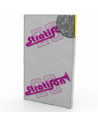
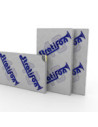
Stratifon 29 and Stratifon 40 panels combine mass, spring, and absorption in a single sheet. The 35mm version (Stratifon 29) combined with two plasterboard sheets (total 6 cm), achieves certified insulation up to 59 dB. It is composed of elastic layers, a heavy $5 \text{ kg/m}^2$ membrane, and high-density glass wool, and is recommended for small spaces such as apartments and thin walls. The Stratifon 40 version, 7 cm thick, offers insulation up to 61 dB and can be self-supporting up to 5 m; it combines multiple elastic layers and heavy membranes, ensuring excellent sound impedance and sound absorption.
Acoustic Wall Installation Phases
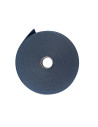
- Apply 50 mm double-sided tape around the entire perimeter of the wall.
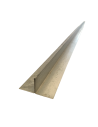
- Lay the "L" profile on the double-sided tape, taking care to leave enough thickness from the wall for the insertion of the acoustic panels.
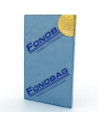
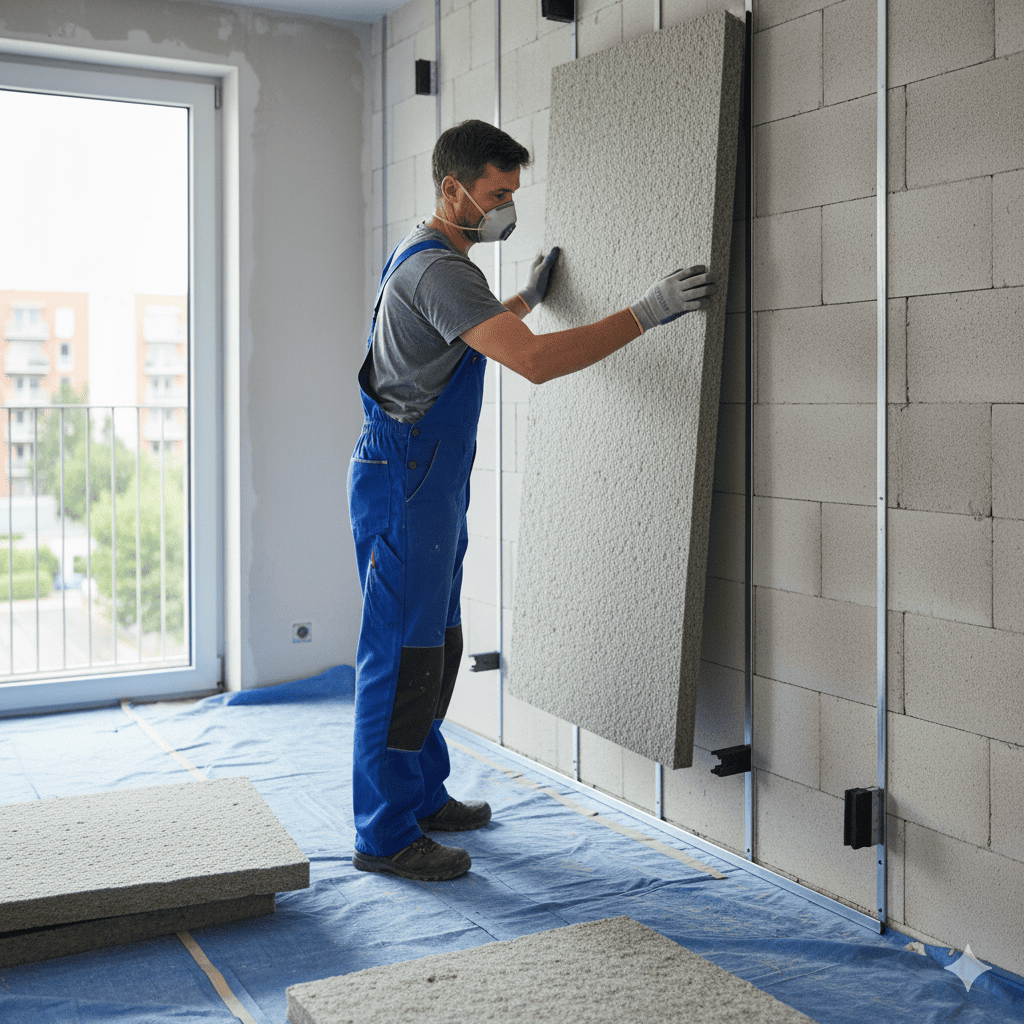
- Lay the first vertical series of STRATIFON/FONOBAG panels along the entire height, starting from the left or right, in complete adherence to the wall.
- After the first series of panels, lay the special vertical "T" profile with the 60mm back facing the future plasterboard sheets. This profile, if correctly installed, will have no point of contact with the underlying wall.
- Subsequently, continue with the vertical laying of a second series of panels and a "T" profile, then a third series of panels and a "T" profile, until the entire wall is completed. If necessary, the panels can be cut with a utility knife. We recommend initially laying the last series of panels without the special "T" profile (see next step).
- After laying the last series of panels, the last special "T" profile can be inserted by making two corresponding cuts in the "L" profile previously installed on the floor (2nd step) to allow positioning.
- Lay the first layer of plasterboard sheets, taking care to keep them detached from the floor, ceiling, and walls by at least 2 mm. Then seal everything with acrylic sealant.
- Lay the 2nd layer of plasterboard sheets, which could be: standard plasterboard sheet, sheet coupled with a membrane, high-density plasterboard sheet. The laying of these sheets must be with staggered joints compared to the underlying ones and with the same application and sealing methods.
- Skim the screw heads and joints. Then it is advisable to skim the entire wall.
- Painting phase, application of a coat of primer.
- Application of 2 coats of anti-mould paint treated with Picoceramix.
N.B.: For Stratifon 29, the side with the letter A must always face the installer!
You can download the installation pdf file by clicking on the following link: Stratifon Application
Mistakes to Avoid
-
Only using sound-absorbing materials. Filling the wall with foams or cork without increasing mass will not block noise.
-
Failure to seal. Neglecting gaps, electrical outlets, or joints between panels allows sound to pass through.
-
Not considering other surfaces. Insulating only one wall when noise also passes through ceilings and floors is ineffective.
-
Unsuitable or insufficient materials. Thin "DIY" panels, such as cardboard or packaging, do not offer real insulation; a combination of certified materials and professional installation is needed.
Stratifon Panels: The Turnkey Solution
Stratifon 29 and Stratifon 40 panels simplify the intervention because they integrate mass, a heavy membrane, and absorbent material in a single sheet. Stratifon 29, only 3.5 cm thick, provides a soundproofing power of 29 dB on the panel and up to 59 dB with a double plasterboard partition wall. It is ideal for apartments with limited space, for renovations, and for accommodation facilities (B&B, hotel). Stratifon 40, 7 cm thick, offers 40 dB on the panel and up to 61 dB with a double sheet; it is self-supporting up to 5 m and combines sound impedance and sound absorption. Both are certified according to European standards and guarantee constant performance over time.
Conclusion
Acoustically insulating a wall requires planning, assessment, and the choice of adequate materials. The most effective approach combines mass, decoupling, and absorption, along with accurate installation and the sealing of every joint. Stratifon panels offer a practical and high-performing solution, combining the three fundamental functions and simplifying installation.
Comments (0)