


Shopping Cart
- Simone
- News
- 0 likes
- 302 views
- 0 comments
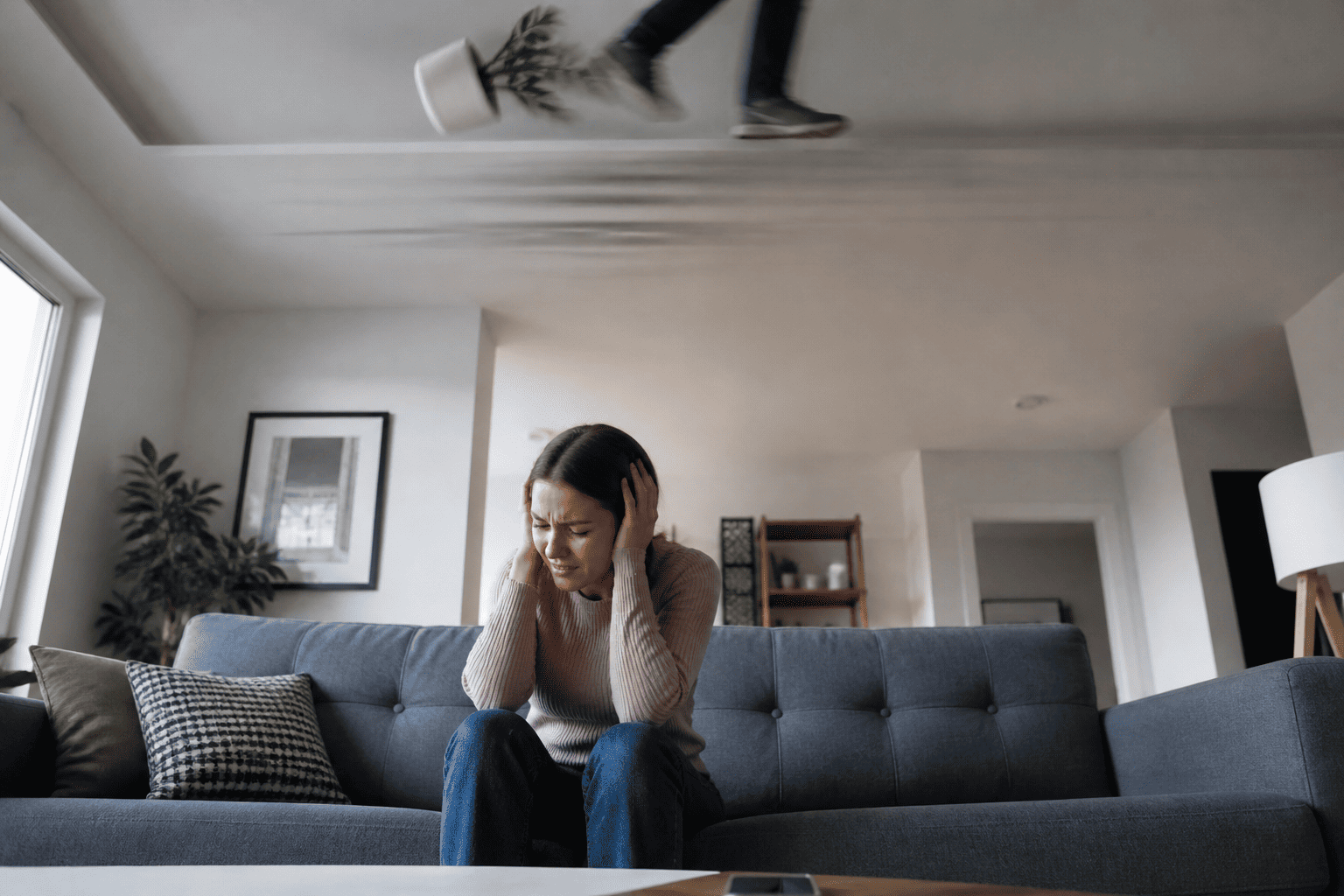
Hearing footsteps, chairs being dragged, or objects falling from the upstairs floor is not just annoying: it is one of the most difficult acoustic problems to solve.
Many people think that simply “insulating the ceiling” is enough to eliminate the noise, but the reality is different: not all solutions work, and money is often wasted unnecessarily.
In this guide we will cover:
- the real cost of soundproofing a ceiling
- what works and what doesn’t
- the most common mistakes
- when it’s worth doing (and when it’s not)
What type of noise comes from upstairs
Before talking about costs, you need to understand one fundamental thing.
There are 2 types of noise:
Impact noise (structure-borne)
- footsteps
- chairs being dragged
- objects falling
This is the hardest to block because it travels through the building structure.
Airborne noise
- voices
- TV
- music
It is easier to reduce.
In most cases, the main issue is impact noise.
How much does it cost to soundproof a ceiling (real prices)
Costs vary significantly depending on the chosen solution.
Basic false ceiling (simple drywall)
- Price: 30–50 €/sqm
- Result: almost no effect on impact noise
This is not an effective solution if the problem is structural noise.
False ceiling with acoustic insulation
- Price: 70–120 €/sqm
- Result:
- decent for airborne noise
- limited for impact noise
Anti-vibration system (decoupled structure)
- Price: 120–200 €/sqm
- Result:
- best solution from below
- real noise reduction
Intervention on the upper floor (floor treatment)
- Price: 80–150 €/sqm
- Result: the most effective solution overall
However, this requires cooperation from the neighbor.
When soundproofing does NOT work
There are situations where results are limited:
- strong structural noise
- old buildings with high lateral transmission
- untreated acoustic bridges
In these cases, you may spend a lot and achieve only minor improvements.
Most common mistakes to avoid
Thinking drywall is enough
This is the most common mistake and almost always leads to disappointing results.
Not isolating vibrations
If the structure is not decoupled, noise continues to spread.
Ignoring side walls
Sound can also come from the sides, not just from above.
Choosing based only on price
Cheap solutions rarely solve the problem.
Real case
1970s apartment with strong footstep noise from upstairs.
Intervention carried out:
- anti-vibration false ceiling
- high-density soundproofing materials
Result:
- perceived improvement: 40–60%
- noise reduced but not eliminated
Total soundproofing is very rare.
How much you can really improve
- Airborne noise: up to 70–80%
- Impact noise: 30–60%
Promises of total silence are not realistic.
When it’s worth doing
- the noise is constant
- you cannot intervene on the upper floor
- you want to improve living comfort
Not worth it if the budget is very limited or if you expect total results.
How to choose the right solution
Every situation is different, you need to evaluate:
- type of noise
- building structure
- surface area
- budget
Without proper evaluation, you risk choosing the wrong solution.
Calculate your real case
To truly understand which solution to adopt, the cost, and the achievable result, use the calculator.
Comments (0)