




Shopping Cart
- Simone
- News
- 0 likes
- 2577 views
- 0 comments

Soundproofing the floor from impact noise: complete guide to the “floating floor”
Impact noise is a shock wave generated by the shoe-floor contact and transmitted through the structure (floor slab, beams, walls). To measurably reduce it, the floor covering must be decoupled from the slab using continuous, highly resilient elastic layers. This guide explains how to design and build a floating floor, when to intervene from above or below, and which mistakes to avoid.
Purpose and physical principles
- Mass. The greater the mass of the flooring system, the more it resists sound transmission.
- Spring. The interposed elastic layer (resilient mat) absorbs the impact and prevents rigid contact.
- Airtightness. Gaps and openings cancel the effectiveness: continuity is crucial.
When to intervene from above or below
- From above (ideal scenario). When it is possible to redo the floor of the noisy room. This allows for a true “floating” structure.
- From below. When the upper floor is not accessible. It does not eliminate impact at the source, but an elastic suspended ceiling + mass reduces the sound transmitted to the room below.
Typical build-ups for floating floors
1) Complete renovation with new screed
- Clean and leveled floor slab.
- Continuous resilient mat (recycled rubber, EPDM, cross-linked polyethylene, or high-density mineral fiber) with perimeter upturn.
- Perimeter isolation strips on all walls and columns.
- Cement screed (or anhydrite) with light reinforcement, thickness suitable for the load.
- Underlayment and final finish (stoneware, wood, LVT), maintaining an elastic perimeter joint.
2) Dry system, reduced height
- Existing floor slab.
- Thin high-density resilient mat, continuous and taped.
- Dry panels paired or double-layer fiber gypsum/gypsum boards with staggered joints.
- Thin acoustic mat and floating finish.
High-impact execution details
- Continuity of the resilient mat. Overlap the edges, tape the joints, and turn up along all walls at least 5–10 mm.
- Perimeter isolation strips. Never allow rigid contact between screed and wall. Cut after installation and apply elastic sealant.
- Service penetrations. Use elastic gaskets and sleeves. Rigid fixings that pierce the system are prohibited.
- Interior doors. Decoupled thresholds; avoid rigid bridges between adjacent rooms.
Intervening from below: elastic suspended ceiling
If you cannot redo the floor above, create a massa-molla-massa suspended ceiling: anti-vibration hangers, cavity filled with absorbent material, and double high-mass board. It does not eliminate impact noise at the source but reduces transmitted sound and also attenuates airborne noise.
Winning combinations
- Floating floor above + elastic ceiling below in critical cases.
- Adjacent lightweight walls: reinforce with sound-insulating panels in a secondary wall system to block lateral transmission paths.
Common mistakes to avoid
- Interrupted or untaped mats: create rigid bridges.
- No perimeter strips. The screed touches the walls and nullifies the insulation.
- Reduced thickness without mass. A thin foam layer under floating flooring is not enough: mass + spring are required.
- Unsealed service cuts. Cause significant acoustic leaks.
- Perimeter joints filled with rigid mortar. Use only elastic sealants.
Testing and verification
- “Coin-drop” test. Comparative listening before/after in multiple points.
- Bridge inspection. Check perimeters, openings, thresholds, and legs of fixed furniture.
- Material documentation. Density, thickness, resilience, and certified impact sound reduction of the system.
Frequently Asked Questions (FAQ)
Can I keep the existing parquet? Only if you still create a continuous elastic layer and add a new mass above, or if you convert the parquet into a floating finish on a dry system.
How many millimeters are really needed? For a noticeable improvement, 20–40 mm between the resilient layer and the added mass are generally required; with high-performance dry systems, this can be reduced, but the total mass must be preserved.
Is the “underfloor mat” enough? If it is only a light anti-impact mat, no. A complete system with perimeter continuity and mass is required.
Rubber or mineral fiber? The key factors are long-term resilience and actual density. Choose according to declared performance, loads, and installation type.
Installation tips
- Lay the resilient mat on a clean, dry surface with continuous upturns.
- Stagger board joints; screw in the prescribed points; avoid rigid contact with walls.
- Seal all edges with elastic mastic; trim upturns after finishing.
Integration with Stratifon systems
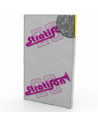
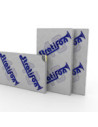
To reduce lateral transmission, combine the floating floor with sound-insulating secondary walls made of high-mass panels and elastic ceilings with anti-vibration hangers. The synergy between mass, decoupling, and absorption provides the best results in lightweight buildings.
Conclusions
The floating floor works because it interrupts rigid contact and adds controlled mass. The difference lies in the details: continuity of the resilient mat, perimeter strips, sealing, and absence of rigid bridges. If the upper floor is not accessible, a well-designed elastic ceiling remains the second most effective solution. Plan carefully, install correctly, verify results: impact noise can truly be reduced perceptibly.
Comments (0)