Shopping Cart
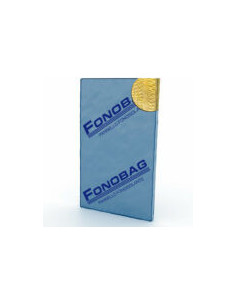

Acoustic insulation is a cross-sector requirement that involves numerous industries well beyond light construction. Stratifon, originally designed for plasterboard, has over time become a versatile, efficient, and lightweight solution for noise control in multiple settings. In this article, we explore all the alternative areas where it can be used, based on real-world cases and market needs.
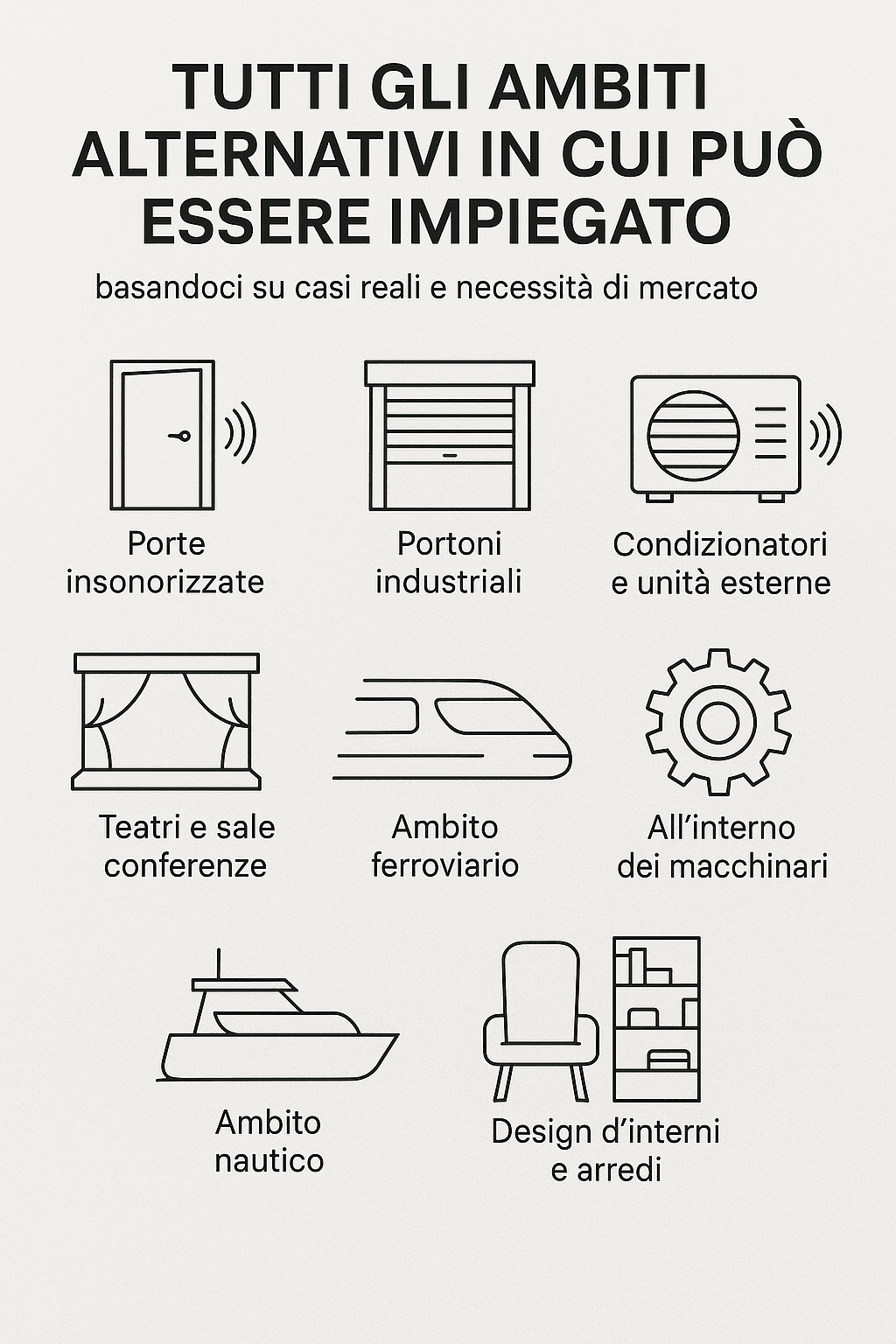
One of the most requested applications of Stratifon is its integration inside doors, both in residential and industrial settings. Thanks to its limited thickness and soundproofing capacity, it can be inserted between wooden or metal surfaces without compromising the aesthetics or functionality of the door. The result? Reduction of sound transmission up to 28-32 dB, depending on the composition.
In industrial settings, Stratifon is used in sectional and folding doors, where it helps limit the propagation of noise generated by processing operations, compressors, machine tools, and logistical flows. Installation occurs during production or retrofitting and complies with regulations for protecting the external environment and workers' health.
More and more frequently, technicians install Stratifon to create small acoustic barriers around outdoor machines such as air conditioners, chillers, and generators. The material is easily shapeable, adapts to irregular contexts, and can be coated or inserted into modular structures. It is an excellent solution for condominium areas or commercial spaces, where it is essential to comply with legal decibel limits.
In contexts where it is necessary to improve indoor acoustic quality rather than insulate, Stratifon is used as an acoustic corrector. It can be installed behind perforated or fabric panels in:
Conference rooms
University classrooms
Home cinemas and recording studios
Rehearsal rooms and theaters
In these contexts, it helps reduce reverberation, improve speech clarity, and enhance spatial sound perception.
One of the main advantages of Stratifon is its lightness combined with acoustic efficiency, a key feature in transport vehicles where every kilogram matters. It is used in:
Railway cabins and passenger compartments
Boats and yachts, in walls, ceilings, and furniture
Campers and special vehicles, also as combined thermal-acoustic insulation
Manufacturers of noisy machinery (printers, compressors, industrial fans) are increasingly seeking solutions to contain noise at the source. Stratifon, thanks to its resistance to vibrations and the ability to be custom-cut, is used as internal lining in enclosures and containment structures.
In the design world, noise pollution is an underestimated enemy. Stratifon has been adopted by architects and designers for the creation of lightweight and sound-insulating partition walls, as well as for decorative panels, totems, displays, and furniture. The material lends itself to:
Creative shaping (laser, milling, cutting)
Customization with fabric, vinyl, or wood coverings
Invisible integration into furniture elements
High soundproofing and sound-blocking power with reduced thickness
Lightweight and easy to transport
“We used Stratifon to soundproof assembly cabins in an automotive company: excellent results and fast installation.” – Marco, installation technician (Rome)
“We inserted it inside a series of custom interior doors for a hotel in Trentino: guaranteed silence and satisfied customers.” – Federica, contract designer
Is Stratifon moisture resistant?
Yes, Stratifon is moisture-protected thanks to its sealed plastic bag packaging, which prevents direct absorption of ambient moisture during storage and installation. However, it is recommended not to expose the material to prolonged humidity or direct water contact, as the protection is intended for handling and installation phases.
Can it be cut on site?
Of course, it can be easily cut with a cutter or blade tools, without releasing harmful dust.
Can it be painted or covered?
Not directly. Stratifon is not designed to receive surface finishes as it is supplied in a protective plastic casing. To achieve a paintable or aesthetically finished surface, it is recommended to pair it with a suitable cladding panel such as MDF, plasterboard, or other compatible materials to be applied to the visible surface.
Comments (0)